

BMS/BAS
Energy
Occupancy
Access Control


Digital Building Foundation
Modern building operations depend on trusted, connected and contextualized data. Switch creates a digital building foundation that unifies systems, structures information and provides the operational context required for analytics, automation and AI.














Buildings Already Have Data. They Don't Have Context.
Most commercial buildings already generate enormous volumes of information. The problem isn't collecting more data. The problem is that the data exists in hundreds of disconnected systems.
The Problem

Different naming conventions.
Different vendors.
Different protocols.
Different formats.
No common understanding.
Without Context, Organisations Cannot
Analyse building performance
Automate operational workflows.
Benchmark portfolios
Deploy AI at scale
Trust reporting
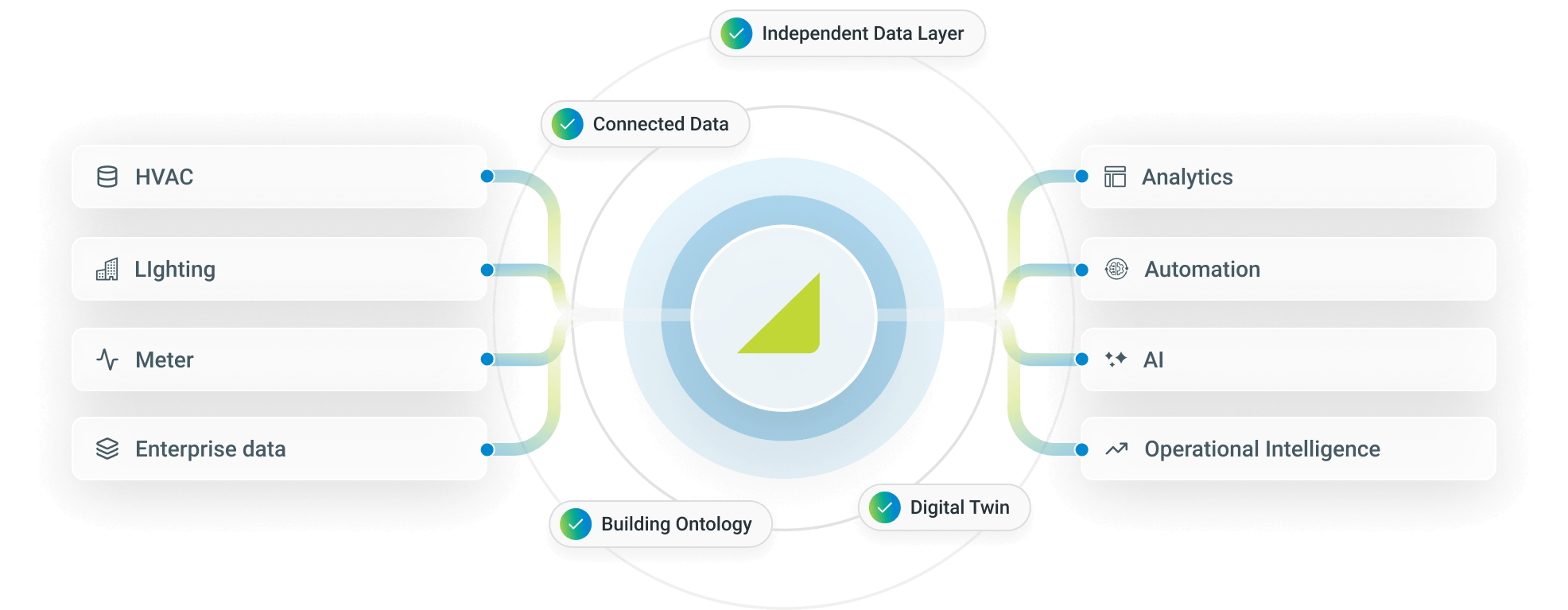
A Digital Building Foundation is the trusted digital representation of a building's operational environment. It combines five essential elements into a single, continuously updated operational model.

Connected Data

Building Relationships

Operational Context

Semantic Meaning

Live Telemetry
Combined into a single, continuously updated operational model.
Everything else sits on top of this foundation.
From data integration to analytics and control, Switch provides the digital foundation required to improve performance, reduce energy consumption and prepare buildings for AI-driven operations.
Bring together operational information from every relevant system.
Example:
BMS/BAS
Energy
Occupancy
Access Control
IoT
CMMS
Weather
Enterprise Systems
Once connected, data is standardized into a vendor-neutral operational model.
The Independent Data Layer provides:
BMS/BAS
Normalized values
Common data structures
Unified access
Raw data still lacks meaning. The ontology defines equipment relationships, spatial hierarchy and operational context.
Instead of knowing:
Point AHU-1-SA-TEMP = 17.4
The platform understands:
This temperature sensor belongs to AHU-1, serves Level 3 East, conditions Meeting Rooms 3A–3F, and is associated with occupancy, IAQ and energy consumption.
The Ontology Defines:
equipment relationships
spatial hierarchy
asset types
dependencies between systems
operational context
The Digital Twin brings everything together. It becomes a living operational representation of the building.
Not a 3D model.
Not BIM.
An operational model that continuously reflects:
assets
systems
Relationships
telemetry
Performance
operational state
Once a digital building foundation exists, organizations can:

Understand
Analyse building performance across multiple systems.

Optimise
Identify inefficiencies using richer operational context.

Automate
Trigger workflows based on operational conditions.
Scale
Deploy consistent operational models across entire portfolios.

Prepare for AI
Provide AI with trusted, structured, contextualized information.
Large Language Models are incredibly powerful. But they cannot reliably reason over inconsistent building data.

Without the Foundation
Trusted data
Relationships
Operational context
Semantic meaning
Without it, AI produces inconsistent results.

With the Foundation
Trusted data
Relationships
Operational context
Semantic meaning
With it, AI becomes a practical tool for improving building operations.
"AI won't transform buildings. Trusted building data will.
AI simply unlocks the value of that foundation."
Instead of dozens of disconnected systems
Switch creates understanding. Our platform doesn't simply aggregate information. It creates a structured digital representation of the building that becomes the foundation for analytics, automation and AI.
That foundation can then support every stage of the operational lifecycle—from fault detection and sustainability reporting to autonomous building operations.
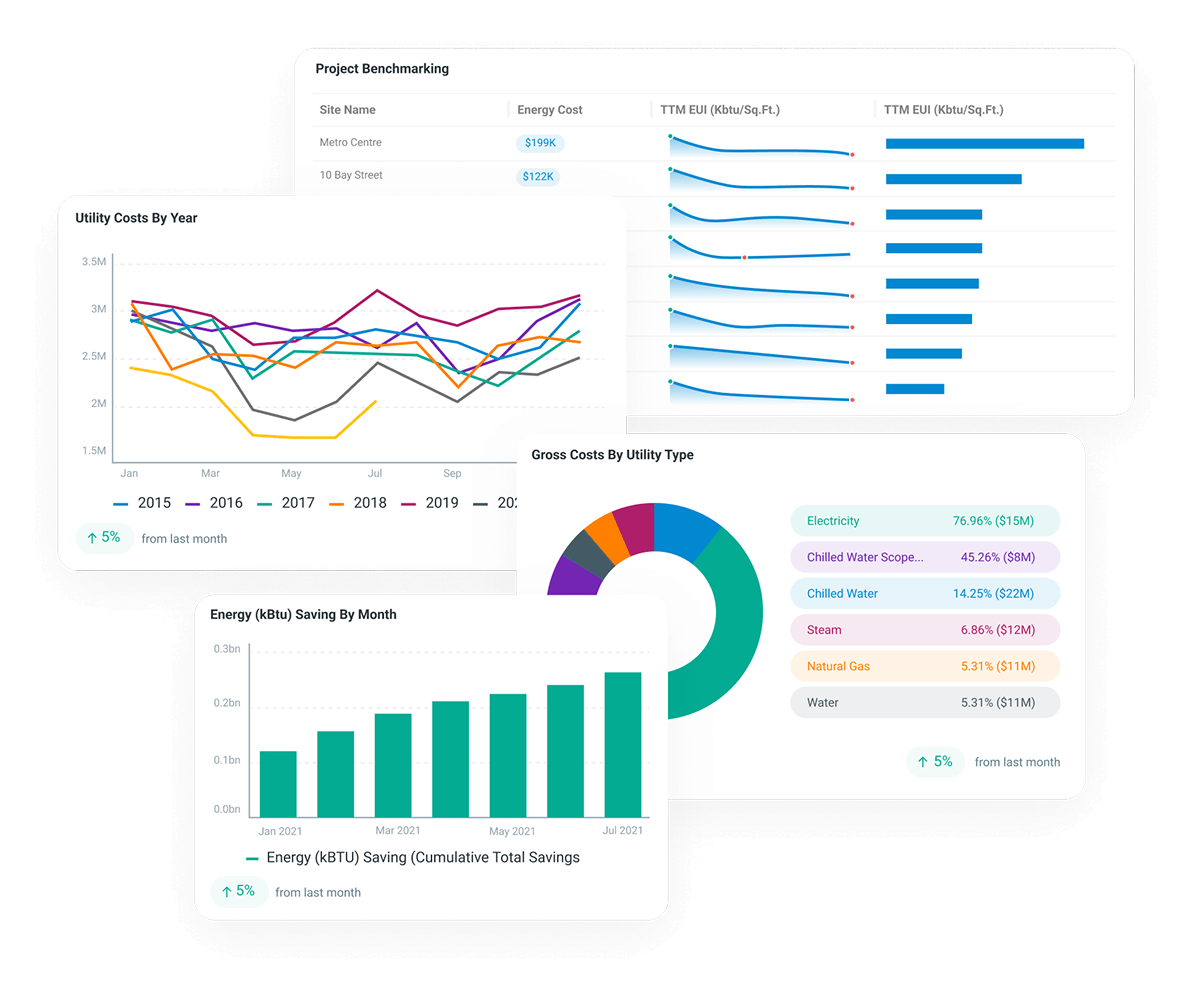
Most platforms stop after connecting data.
Without Switch
Dozens of disconnected systems
Manual integrations
Inconsistent reporting
Isolated analytics
AI experimentation
With Switch
One trusted operational model
One digital foundation
One source of truth
Enterprise operational intelligence
AI-ready building portfolios


.png)



.png)


Switch Automation improved the data competency of our entire property management team. With the Switch Platform, we can spot trends in historical HVAC data to understand and optimize underperforming sites leading to 17-25% monthly energy savings.

Robert Woodall
Vice President, Property Technical Manager
Learn how smart building software, digital twins, analytics, and automation help improve operational efficiency and sustainability.

A Digital Building Foundation is a trusted digital representation of a building that connects systems, organizes operational data and provides the context needed for analytics, automation and AI. Switch brings together building data, equipment relationships and live telemetry into a single operational model that supports smarter building management.
Modern buildings generate data from many different systems, but disconnected information limits visibility and operational efficiency. A Digital Building Foundation creates a single source of truth by connecting and standardizing building data, making it easier to monitor performance, automate workflows and support enterprise decision-making.
Building Information Modeling (BIM) is primarily used during the design and construction of a building, while a Digital Twin represents the building's live operational environment. Switch creates an operational Digital Twin that continuously reflects equipment, systems, telemetry and building performance, helping facilities teams make informed operational decisions.
Building ontology defines how building assets, equipment, spaces and systems relate to one another. Instead of viewing isolated data points, Switch provides the operational context needed to understand how buildings function, enabling more accurate analytics, automation and AI-powered insights.
An Independent Data Layer is a vendor-neutral data model that standardizes information from multiple building systems into a consistent format. Switch normalizes building data across different vendors and protocols, providing a trusted foundation for reporting, analytics and intelligent building operations.
Yes. Organizations do not need to build new facilities to create a Digital Building Foundation. Switch integrates with existing Building Management Systems (BMS), HVAC equipment, energy meters, IoT devices and enterprise platforms to connect and organize operational data across existing buildings.
A Digital Building Foundation can connect data from Building Management Systems (BMS), HVAC equipment, lighting controls, energy meters, occupancy sensors, access control systems, CMMS platforms, IoT devices, weather services and enterprise applications. Switch unifies these data sources into a single operational model.
Artificial intelligence depends on accurate, structured and contextualized information to generate reliable insights. Without connected building data and operational context, AI cannot fully understand how building systems interact. Switch creates the trusted digital foundation that enables AI to deliver meaningful recommendations and automation.
Book a demo and see how Switch connects, analyzes, and optimizes your buildings from day one.


